

Jesus told a story of two brothers. The older brother fulfilled society’s expectations of a dutiful son. He worked alongside his father, maintaining and supervising the family estate. He never broke the rules, never disappointed his father, never neglected his responsibilities.
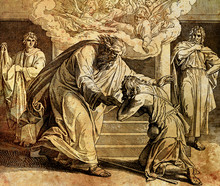
The younger brother was the family wild card. He chafed at responsibility and expectations, and when he reached manhood he demanded that his father hand over whatever his part of the inheritance would be worth so that he could go out on his own. He was sure he could find a better life for himself than drudging away under his father’s thumb. When his father, instead of rebuking his restlessness, gave him what he wanted, the young man traveled as far from home as he could get. With no one he had ever known to see or comment on his lifestyle, he indulged every desire and filled his life with every pleasure he could imagine.
On the surface the brothers look like polar opposites: one the responsible, respected son; the other rebellious, thoughtless, and selfish. But the story doesn’t end there, and the young men are both full of surprises. The younger brother woke up one day to find all of his money gone; he had done nothing to replenish his resources, had been entirely focused on his “good life” until he could no longer pay for his pleasures. Then, as drought set in and work was scarce, he took the most demeaning job in his society in the hard realization that he had wasted his truly good life. He had squandered every blessing ever given him, including that of a father who only wanted the best for him.
The older brother came home from working one day to find the house in a fever of celebration; the rebellious son had returned in humility and had been received with joy. The son who had been outwardly responsible and respectable immediately revealed his true heart, a knot of well-hidden resentment and rebellion. All the while he did what was expected, he hated responsibility, wished for the pleasure his brother pursued, and resented what he perceived as lack of appreciation from his father.
Both brothers shared the misunderstanding that their inheritance was a physical thing: money, possessions, etc. Neither understood their father’s love and provision for them as being his true estate. Both threw away, squandered, the relationship that was their father’s truest legacy.
Jesus told this story to Jewish leaders who complained that He welcomed sinful people into his presence. Those sinful people were the brother who had thrown everything away for his own pleasure, and who had been humbled and drawn back to the father’s embrace. The leaders were the “responsible” son who secretly harbored a rebellious heart. Neither those who had wasted their lives in rebellious lifestyles or those who prided themselves on outward righteousness had appreciated the love of God. They viewed God’s “estate” as an oppressive system of rules and demands; the only difference was whether they rebelled openly or secretly.
Jesus came to show us His true estate. He came to demonstrate the open arms of the father and the joy of belonging with Him. He came to show the difference in being a son and being a slave. Those who recognize the blessing of belonging to God approach Him with a longing to serve in gratitude and love, and receive the treatment of sons with awe and wonder. Those who see themselves as sons strictly because of their own outward fidelity, expecting privileges that ultimately get them out of such fidelity, behave like slaves. They throw away their inheritance for the sake of selfish pride.
The great news is that, no matter how we have squandered our portion, our condition is not final unless we make it so. The younger son was welcomed home with great celebration. The older son was reminded that he had always had access to what he sought, he had just been looking from the wrong direction. We will never stop being God’s children as long as we live, no matter how we waste our time and His chasing the wrong dreams. He will always be there to welcome us home. But why squander any of it? Why throw away a love, an eternal estate, so full as His?
 The Word Worker
Leave a comment